Stories
Astonishing Road Accidents Caught on Street Cameras — and What They Teach Us
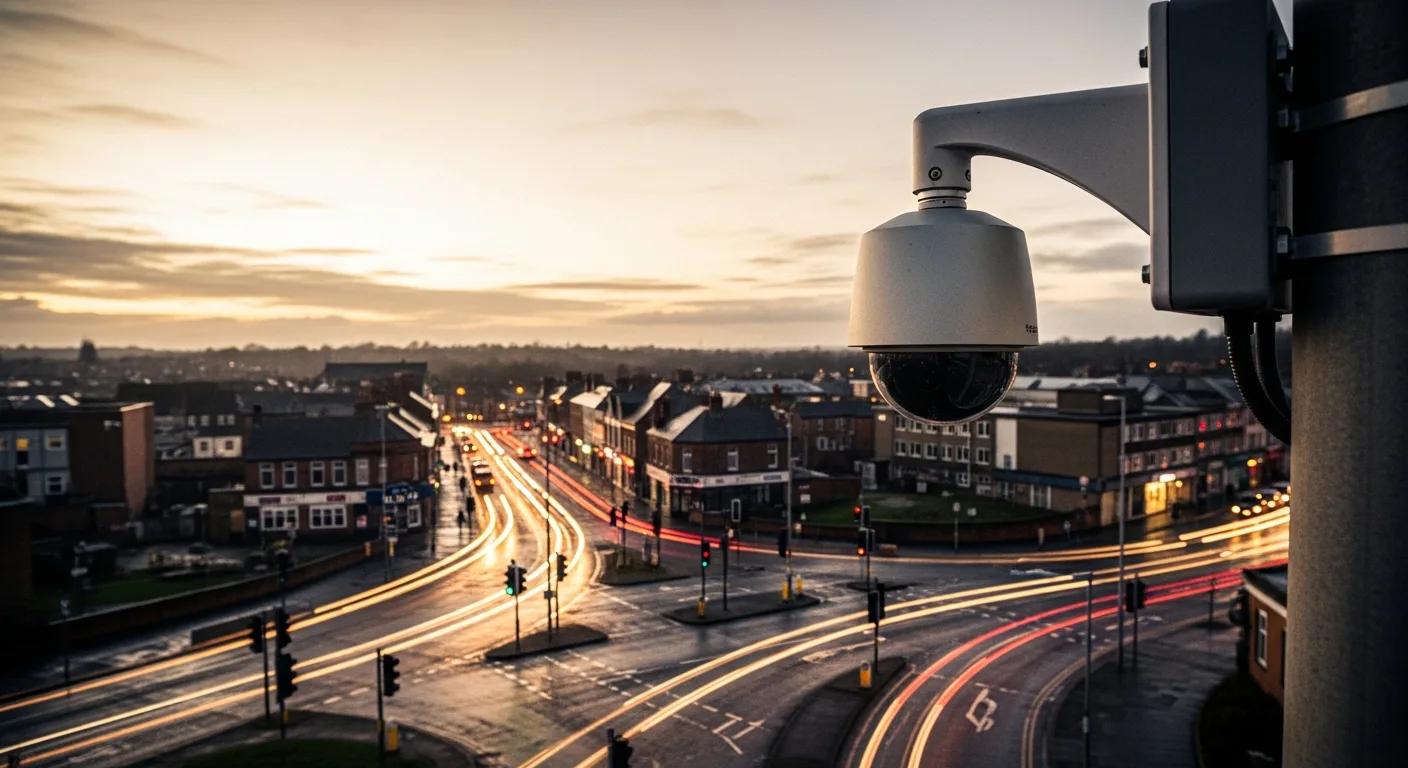
High above every British town centre, bolted to poles and gable ends, sits an audience that never blinks. Street cameras were installed to deter crime and manage traffic — but as a side effect, they have quietly assembled one of the strangest archives of modern life: the everyday road accident, captured from above in patient wide-angle. Councils and police release the clips; safety campaigns build lessons around them; millions of us watch through our fingers. Here's a tour of the genre — and the surprisingly useful things it teaches anyone who uses a road, on four wheels or two feet.
Why street-camera footage is so gripping
Dash cams show you a driver's view; street cameras show you the whole chessboard. From that high angle you can see what no participant could — the delivery van and the reversing car converging on the same empty space, the pedestrian stepping out precisely as the cyclist commits, the roundabout misunderstanding assembling itself piece by piece, seconds before anyone on the ground knows it's coming. The dread is architectural: you watch the geometry close like a trap. And when it ends — as the released clips overwhelmingly do — in crumpled metal, wounded pride and everyone walking away, the relief is half the entertainment.
The classics of the genre
The car park ballet
The single richest seam. Supermarket cameras have immortalised every variation: the two cars reversing serenely into each other across an empty row; the driver who exits the space, forgets the handbrake, and jogs after their own vehicle; the fifteen-point turn that ends against the only bollard in shot. Low speeds, low stakes, high comedy — and the reason slow doesn't mean safe, it means survivable.
The junction misunderstanding
Town-centre cameras catch the same collision endlessly, everywhere: two drivers, each certain the other would yield, meeting in the middle at walking pace with a synchronised expression of betrayal. Watched from above, the cause is almost never villainy — it's two people making confident assumptions about what the other could see.
The runaway shopping trolley — and its cousins
Wind plus gradient plus anything on wheels equals footage. Trolleys gathering speed across car parks like escaping livestock; wheelie bins broadsiding parked hatchbacks on collection day; in coastal towns, the occasional deckchair at speed. Nobody is at fault, which is precisely what makes it perfect viewing.
The lucky escape
The clips safety campaigns are built from: the pedestrian who pauses to check a phone and misses, by a stride, the van mounting the kerb; the driver who stops a foot short of the cyclist in the blind spot. Watched from above, luck looks exactly like what it is — margin, arriving by accident rather than design.
What the archive actually teaches
Strip the slapstick away and thousands of hours of street-camera footage repeat a short syllabus:
- Almost nothing happens fast. The camera sees collisions assemble over five, ten, fifteen seconds. The lesson isn't quicker reflexes — it's earlier attention: the scan, the mirror glance, the extra beat before pulling out.
- Assumption is the true cause of accidents. "They've seen me" and "nothing's coming" — from above, you watch both beliefs fail in real time. Eye contact, signals and patience are how the belief gets verified before it's bet on.
- Car parks deserve motorway respect. More scrapes per square metre than anywhere else on the network, because everyone relaxes at 5mph — the footage says don't.
- Pedestrians are participants too. The archive is even-handed: for every drifting driver there's a walker stepping off a kerb mid-scroll. Margin is everyone's job — a point worth extra weight for those of us whose hearing, sight or stride isn't quite what it was.
If the unblinking witness catches your bump
Worth knowing before you ever need it:
- Footage can usually be requested. Council and police CCTV involving you can be sought under data-protection rules (a "subject access request"), and insurers routinely ask operators to preserve relevant clips. Private systems — supermarkets, petrol stations — are approached via the operator, politely and quickly.
- Speed matters: most systems overwrite on a rolling basis, often within days or weeks. If a car park mystery dent has a camera nearby, ask that week, not after the claim stalls.
- The camera is neutral — which is its gift. In a your-word-against-theirs dispute, the high angle has settled more arguments than any witness statement. (And guard the settlement money from the follow-up "claims specialist" cold call — our scams guide explains that species.)
The gentle moral
Watch enough of these clips and something shifts in your own habits: you start seeing the chessboard. You leave the extra car length; you wait out the trolley wind; you make the eye contact. The archive's thousands of small disasters compress into one piece of advice our grandparents gave for free: take your time — the road will still be there. For the days when margins fail anyway, it helps to have your own affairs in calm order — a budget with a buffer jar absorbs a bumped excess far better than a shocked one. And if you enjoyed this corner of the accidental-camera genre, the sea-going department is somehow even less dignified: see our companion piece on boat mishaps by the shore.
The short version
- Street cameras have turned everyday accidents into a public library of near-misses — gripping because you see the whole board.
- The recurring causes are assumption and absent margin, not speed demons; car parks are the comedy capital.
- Footage of your own incident can be requested — ask fast, systems overwrite.
- The takeaway fits on a beermat: look earlier, assume less, leave room.